
The Human Return Library
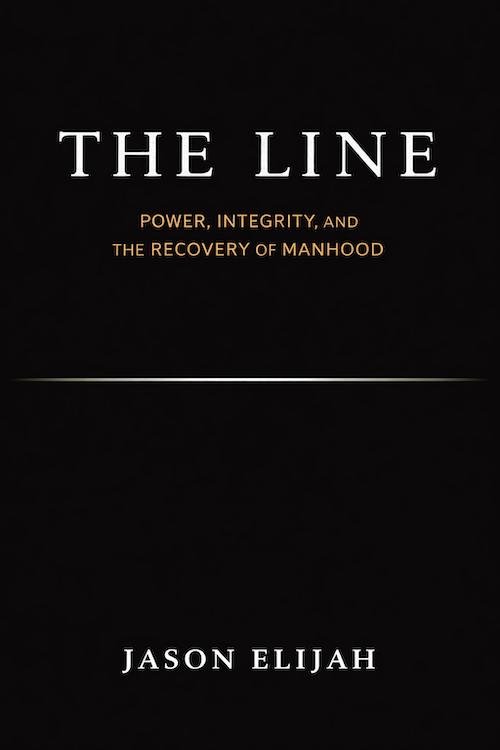
The Line
Power, Integrity, and the Recovery of Manhood
After conditioning, a return to integrity and coherence.Available on Amazon ↗
About the book
The Line turns toward a reality many men feel long before they can explain it: somewhere along the path to adulthood, something essential went missing. Many learned how to function, compete, perform, and belong, yet never received the guidance that would have formed their inner life. The result is a strange condition of modern manhood—competence on the surface, uncertainty underneath.
This book is not about improving men in the shallow, motivational sense. It is about recovering something that was never properly formed. Many men were not initiated into adulthood; they were conditioned into it. They were taught how to win approval, pursue status, numb discomfort, and keep moving forward. Far fewer were shown how to remain present when conscience begins to speak, how to hold power without discharging it into harm, or how to tell the truth when truth costs something.
Because of this, The Line looks closely at the forces that shaped modern masculinity. It traces the disappearance of initiation, the reward systems that train boys long before they understand them, and the grooming structures hidden inside status culture, pornography, peer hierarchy, digital life, and dominance itself. The picture that appears is not one of inherent corruption, but of conditioning that took hold before many men had the language to resist it.
The book then moves inward to the places where that conditioning lives inside the body. Father hunger. Emotional illiteracy. Shame avoidance. Nervous system dysregulation. The quiet fracture between the man a person appears to be and the one he senses he is becoming. These realities are treated neither as excuses nor accusations. They are influences that must be understood before responsibility can truly begin.
This is where the title reveals its meaning. The line is not a slogan meant to sound strong. It is a moral threshold. The moment a man stops outsourcing his conscience to culture, peers, appetite, fear, or momentum and begins accepting responsibility for who he is becoming. It is the place where explanation ends and choice begins.
From there, the book turns toward recovery—not as spectacle or ideology, but as the steady rebuilding of internal governance. Emotional literacy. Nervous system repair. Sexual integrity. Truth tolerance. The restoration of an inner father capable of restraint, honesty, and protection. The practices described are small and grounded because the change being asked for is real.
What distinguishes The Line from much of the conversation about men is its refusal to flatter or condemn. It does not reassure men that everything is fine exactly as it is, and it does not treat them as irredeemable. Instead, it stands in a more demanding place: moral seriousness without humiliation, compassion without collusion.
As the work unfolds, the book becomes something like a corrective initiation. Not through spectacle, but through clarity. It asks what it would mean for a man to become trustworthy again—able to pause under pressure, able to feel impact, able to refuse what harms, able to hold power without corruption.
What emerges is a vision of manhood grounded not in conquest or approval, but in coherence: the capacity to remain the same person in private and in public, under calm and under strain, with nothing hidden behind performance.
You do not become a man because time passes.
You become one when responsibility stops being theoretical.
Why This Book Exists
The Line didn’t begin with a single event. It built slowly.
Over time, I found myself in environments where manipulation was normal, distortion was explained away, and clarity was treated as a problem. My instinct was to stay open, patient, non-judgmental. I told myself that giving people space was strength. That calm clarity should be enough.
But something started to shift.
I could feel myself staying silent where I wanted to speak. Letting things pass that didn’t sit right. Explaining behavior I didn’t actually agree with.
Nothing obvious was breaking. But something in me was.
The tipping point came when someone I cared about refused even basic self-confrontation. I could see what was happening clearly. That wasn’t the issue.
The issue was accepting that I couldn’t change him.
I could recognize distortion, but I didn’t yet have the steadiness to hold my ground in it. My words didn’t carry weight because they weren’t backed by something fully lived.
That realization didn’t produce blame. It produced responsibility.
It became clear that before I could ask anything of anyone else, I had to become clear myself. Not in thought, but in structure. Not just seeing, but aligning what I saw with what I did.
Clarity, I realized, is not sharp thinking. It is alignment between perception, boundary, and action. Without that, words don’t land.
From there, the question changed. It was no longer how to reach someone else. It became: what would it take for me to speak from a place that doesn’t move?
Some assumptions didn’t survive that shift. That the environment was neutral. That clarity and care were enough. That I could stay where I was and remain intact.
Underneath those was something simpler: the fear of losing belonging, the fear of standing alone, the fear of becoming someone whose clarity might disrupt connection.
Once I saw that, I couldn’t unsee it.
The line moved.
It was no longer just about obvious harm. It showed up in smaller places: what I tolerated, what I delayed, where I chose comfort over truth.
Integrity stopped being a principle and became a series of decisions.
At the same time, power changed shape. It wasn’t about control. It was influence—the impact of my presence, my hesitation, my clarity or lack of it. What I repeated began to matter more than what I believed.
That made power feel heavier. And something heavier has to be held more carefully.
The cost wasn’t dramatic, but it was real.
I lost the ability to stay vague. I lost a kind of easy belonging. Some relationships and environments only worked if I ignored what I could see. That stopped being possible.
Clarity can feel like disloyalty in places built on avoidance. But it isn’t.
What changed wasn’t loud. It was steady. Less performance. Fewer moments where I looked to someone else to decide what was okay. A growing ability to stay present without escaping or smoothing things over.
I also began to see something more broadly. A lot of men are never actually formed. They’re shaped by environment, pressure, imitation—but not guided. Some are shaped by distortion. Some by absence. Some not at all.
That was true for me too.
This book became part of that missing formation.
Because seeing isn’t enough. You can see clearly and still live the same way. What changes a life is crossing from habit into choice, from performance into integrity.
This work comes out of that crossing. From a recognition that my own tolerance had drifted into self-betrayal.
A man who can’t say no isn’t safe, even if he’s kind. A man who can’t hold his own clarity will eventually fail to hold anything else.
Without this shift, everything I saw would have stayed intellectual. It wouldn’t have changed how I lived, or how I spoke.
The direction isn’t perfection. It is lived integrity, especially when it costs something.
That’s why this book exists.
If something in you recognizes this, the work comes out of that struggle.
Read an excerpt from this book
Chapter 1
The Question Men Avoid
There is a question most men learn not to ask themselves. It is not complicated. It does not require education, insight, or a refined moral vocabulary. It does not even require courage at first. What it requires is stillness, and that is precisely why it is avoided. Stillness removes distraction. It removes momentum. It removes the background noise men learn to hide behind. In stillness, something has a chance to speak.
The question is this: are you okay with the man you are becoming?
Not the man you intend to become someday, once things settle down or circumstances improve. Not the man you present to other people, polished just enough to function. And not the man you explain yourself as when you are tired, pressured, defensive, or cornered. The man you are becoming through your actual choices, your habits, your silences, and the lines you cross without stopping long enough to feel them.
Most men do not answer this question honestly because answering it changes things. Once you tell the truth, even quietly to yourself, you cannot unknow it. You cannot unsee the distance between who you are and who you respect. You cannot continue on momentum alone. Something in you knows that an honest answer will require adjustment, and adjustment always costs something.
So the question is delayed. It is distracted from. It is intellectualized and turned into philosophy, humor, cynicism, or a kind of self-awareness that never reaches behavior. Anything but faced. Often it is not even refused outright. It is simply met with silence, a subtle internal freeze that feels like confusion but is actually avoidance.
I once asked a man a version of this question as plainly as it can be asked. I did not accuse him. I did not raise my voice. I did not threaten or moralize. I asked him to choose between two options. One meant he was satisfied with how he was living. The other meant he wanted to change.
He could not answer.
Because either answer would have required him to face himself without the usual exits.
If he chose the first, he would have had to consciously accept becoming someone he did not fully respect and own that choice without disguise. If he chose the second, he would have had to admit that the way he was living was costing him his integrity and begin dismantling a life built around avoiding that truth. Both options threatened the identity he was surviving inside, so his nervous system chose a third response.
Silence.
This is not rare. It is common. And it is not stupidity or weakness.
It is protection.
When a man has built his sense of safety around belonging, reward, and avoidance, self-confrontation feels like danger. Existential danger. His body responds as if something essential is about to be taken from him. Status. Safety. Identity. Belonging. So he freezes, deflects, explains, jokes, argues, or disappears. The behavior varies, but the function is the same. Do not stop. Do not feel. Do not look.
Most men do not avoid the truth because they do not care about integrity. They avoid it because they care about survival and have learned to confuse the two. They learned early that belonging kept them safe and that certain truths threatened that belonging. Over time, the nervous system stops distinguishing between social risk and actual danger. Conscience begins to feel unsafe.
Here is the quieter truth beneath that avoidance. Most men are not evil. They are conditioned and uninitiated. They were taught how to function before they were taught how to choose. They were rewarded for performance before they were anchored in conscience. They learned what works long before they learned what is right. Once a system starts rewarding you for staying slightly disconnected from yourself, stepping out of it begins to feel like loss rather than freedom.
So men learn to manage discomfort instead of listening to it. They learn to explain themselves instead of examine themselves. They learn to ask, Why am I like this? instead of asking, What am I doing with who I am becoming? The first question softens responsibility by pointing backward. The second restores it by pointing forward.
This is where things turn serious.
A man does not become dangerous when he is angry, wounded, or confused. Those states can be worked with. A man becomes dangerous when he can no longer face himself and still needs to feel justified. When that happens, conscience gets outsourced. To peers. To incentives. To habit. To fear. To whatever rewards him for not stopping. Harm does not begin with cruelty. It begins with disconnection and explanation.
There is also a moment, usually quiet, when avoidance stops being unconscious. It is the moment when you feel the question land in your body and recognize it. The tightening in the chest. The urge to distract. The impulse to argue or minimize. Before this moment, avoidance could happen without awareness. After it, avoidance becomes a choice.
From here on, not answering is no longer neutral.
This is often how the line is first felt. Not as a thought, and not as a moral declaration, but as a bodily refusal to keep living divided. Something in you resists the familiar split between who you appear to be and who you know yourself to be. That resistance may feel like discomfort, grief, irritation, or fatigue. It is not pathology. It is integrity trying to surface.
I do not assume you are a bad man. I assume you are a man shaped inside systems that rewarded avoidance and called it normal. I assume you have made compromises you did not fully notice at the time and then learned how not to look at too closely. That is not a moral verdict. It is a description of how erosion works.
What matters now is not how you got here. What matters is whether you are willing to answer the question you have learned to avoid.
You do not have to answer it out loud. You do not have to answer it to me. You will answer it with your next few choices either way. Action answers questions long before words do.
I am not asking you to condemn yourself. I am asking you to stop disappearing when your conscience shows up. I will be clear about my position so there is no confusion as we move forward. I will not shame you for what you see in yourself here. I will not flatter you to keep you comfortable. And I will not help you lie to yourself in ways that cost other people their safety.
If you stay with me, you will be asked this question again, in different forms and at deeper levels. You will be given tools to answer it without collapsing, defending, or numbing. But the responsibility to answer it will always remain yours.
Before we go any further, take a moment. Do not analyze. Do not explain. Do not prepare a better future version of yourself. Just notice what it feels like in your body to let the question land without interference.
Are you okay with the man you are becoming?
Whatever comes up next is not a verdict. It is information.
And it is enough to begin.