
Threshold One · Structure
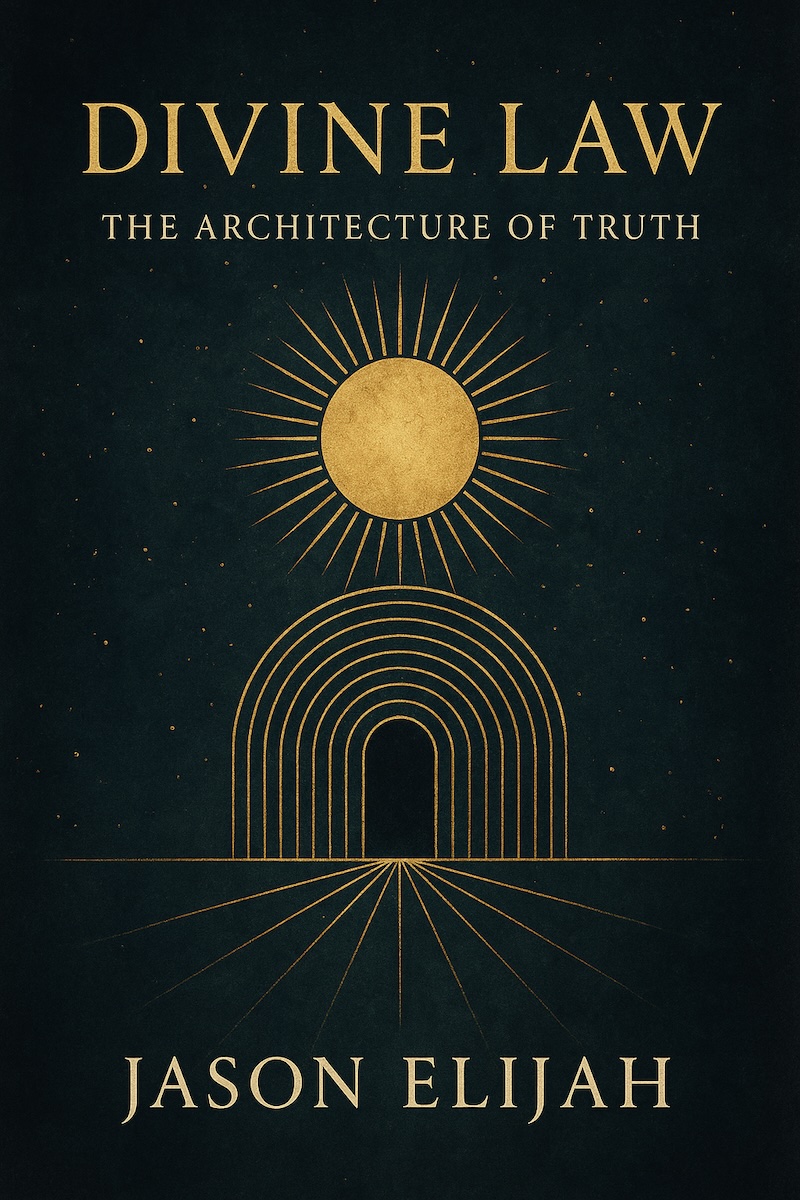
Divine Law
The Architecture of Truth
Truth does not need belief to act, only clarity to be recognized.Available on Amazon ↗
About the book
Divine Law: The Architecture of Truth explores a simple idea: that truth is not a belief system, a doctrine, or a moral rulebook, but a structure that reality already follows.
Most people grow up thinking of law as something imposed from outside: commands, institutions, traditions, systems that tell us how we should behave. This book approaches the idea from the opposite direction. It asks what remains when those systems fall away.
What if truth does not need to be enforced?
What if coherence is already built into the nature of consciousness itself?
Divine Law follows that question inward. It looks at the patterns beneath experience, how awareness recognizes truth, how distortion leads to suffering, and how healing becomes possible when a person realigns with what is real.
Rather than presenting a spiritual doctrine, it traces the mechanics of coherence. It looks closely at the ways people move in and out of alignment with their own awareness through fear, trauma, power, identity, and the pressure to survive inside systems that often reward disconnection.
At the center of the book are Seven Principles of Divine Law, each describing a fundamental pattern of consciousness and reality. These principles are not commandments. They describe how life seems to work beneath belief: why control cannot override what is real, why truth does not require opposition, why awareness remains self-governing, and why life continually moves toward restoration even after distortion or harm.
From there, it explores how these principles appear in everyday life. It looks at the relationship between Divine Law and the psyche, trauma, identity, creativity, ethics, and awakening. The same pattern continues to emerge: beneath confusion, fear, and the stories people inherit about themselves and the world, there remains an order that has not been broken.
Divine Law does not try to overwhelm or persuade. It is written to clarify.
At its heart is a simple insistence: that reality is coherent, that consciousness is not owned by any external authority, and that the human capacity for healing and alignment has not disappeared.
It has only been forgotten.
This work invites the reader to look again at what has always been present beneath belief, fear, and identity itself, and to recognize the structure that has been holding life together all along.